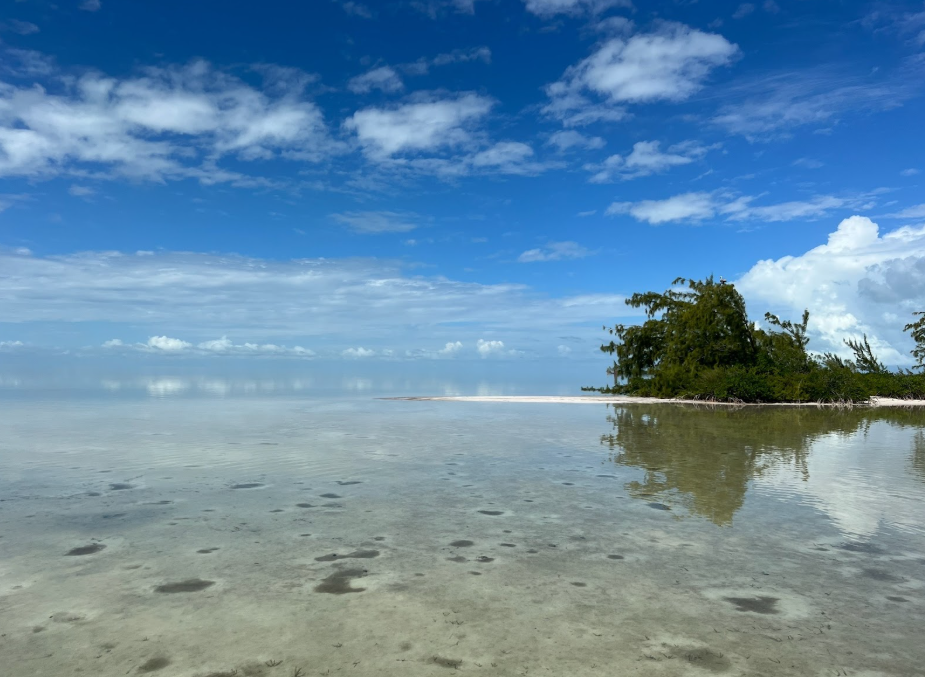
One of the things that makes fishing in Xcalak, Mexico so unique is the sheer variety of water you can fish in a single day. Many flats destinations are known for just one type of habitat. Some have endless turtle grass flats while others are dominated by mangrove shorelines.
Xcalak is different.
Here, the fishery is made up of a mix of lagoons, winding channels, and open Caribbean flats, all connected to the massive ecosystem of the Mesoamerican Barrier Reef. This diversity is part of what makes flats fly fishing in Xcalak so dynamic and exciting.
For anglers visiting for the first time, understanding how these environments work can help you better appreciate the fishery. Each type of water holds different fish, requires slightly different tactics, and offers its own unique challenge. Often the best fishing days involve moving between all three with the help of experienced guides from Xcalak On The Fly.
The Lagoons: Quiet Water and Juvenile Tarpon
Why are the mangrove lagoons around Xcalak important for fishing?
The mangrove lagoons surrounding Xcalak are some of the most protected water in the system. Hidden behind mangrove islands and shallow shorelines, these areas stay calmer when wind pushes across the open flats.
But what truly makes them special is the fish they hold.
These lagoons are prime habitat for juvenile tarpon, ranging from a few pounds up to the 40 to 60 pound class. The warm, sheltered backwaters create the perfect environment for young tarpon to thrive.
Mangrove edges provide structure, shade, and ambush points, making them ideal feeding zones. Tarpon fly fishing in Xcalak’s lagoons usually involves careful presentations along mangrove lines and small pockets of open water.
The takes are often sudden and explosive. Once hooked, tarpon quickly remind anglers why they are one of the most thrilling species in saltwater fly fishing. Snook and other predators also appear in these lagoons from time to time, adding an element of surprise.
The Channels: Highways for Moving Fish
How do channels influence fish movement in the Xcalak flats?
Channels are the connective system of the Xcalak flats fishery. These deeper cuts link flats, lagoons, and open bays, acting as travel routes for fish moving with the tides.
As the tide rises or falls, shrimp and baitfish are pushed through these funnels. Gamefish follow closely behind.
Bonefish, permit, and tarpon all move through these channels depending on tide conditions. Fishing these areas often feels different from classic shallow water sight casting. Instead of tailing fish in inches of water, anglers may target cruising fish or fish staging along current edges.
Timing becomes crucial. When the tide begins moving and bait is pushed through the channels, activity can turn on quickly. During these windows, guided fly fishing trips in Xcalak often focus heavily on channel edges where predators wait for food to drift by.
The Open Flats: Classic Caribbean Sight Fishing
What makes the open flats of Xcalak so famous?
When most anglers imagine fly fishing in Xcalak, they picture the open flats of Chetumal Bay. These wide expanses of turtle grass and sand are where some of the most classic Caribbean flats fishing happens.
Schools of bonefish cruise the shallows while permit move slowly across the flats searching for crabs. This is pure sight fishing.
Anglers stand on the bow of a skiff while a guide quietly poles across the flat. Everyone scans the water for subtle movement. A faint shadow, a tail breaking the surface, or the gentle push of a fish gliding through shallow water.
When a fish appears, everything changes in an instant. A quick cast. A careful strip. And hopefully, a tight line.
These open flats are also where anglers chasing permit spend much of their time. The fish are often solitary or in small groups and demand precise casting and perfect presentation. It can be challenging fishing, but when it comes together it becomes an unforgettable Caribbean fly fishing experience.
A Fishery That Changes With the Tides
Why are tides so important in Xcalak?
What connects all these environments is the tide.
Water moving in from the Caribbean spreads across the flats, flows through the channels, and eventually fills the lagoons. When the tide falls, the process reverses.
Fish move with this water, shifting between feeding areas and deeper holding zones throughout the day. A flat that seems quiet early in the morning can suddenly come alive once the tide begins moving.
This constant motion is part of what makes Xcalak flats fishing so dynamic. Experienced guides at Xcalak On The Fly understand these tidal patterns and move between lagoons, channels, and open flats throughout the day to stay in the most productive water.
The Beauty of the Xcalak System
Why is the Xcalak fishery so unique?
When you step back and look at the bigger picture, the Xcalak flats ecosystem is more than just a single fishery. It is an interconnected network of habitats working together.
Mangrove lagoons shelter young fish. Channels move water, bait, and predators through the system. Open flats provide the perfect stage for world class sight fishing.
For anglers, this diversity means no two days on the water are ever the same. Every tide brings new opportunities, every flat tells a different story, and every cast carries possibility.
Ready to Experience the Xcalak Flats?
If you want to explore the lagoons, channels, and open flats of Xcalak, Mexico, Xcalak On The Fly offers expert local guides, comfortable accommodations, and access to some of the most exciting Caribbean flats fly fishing anywhere.
Leave a Reply