
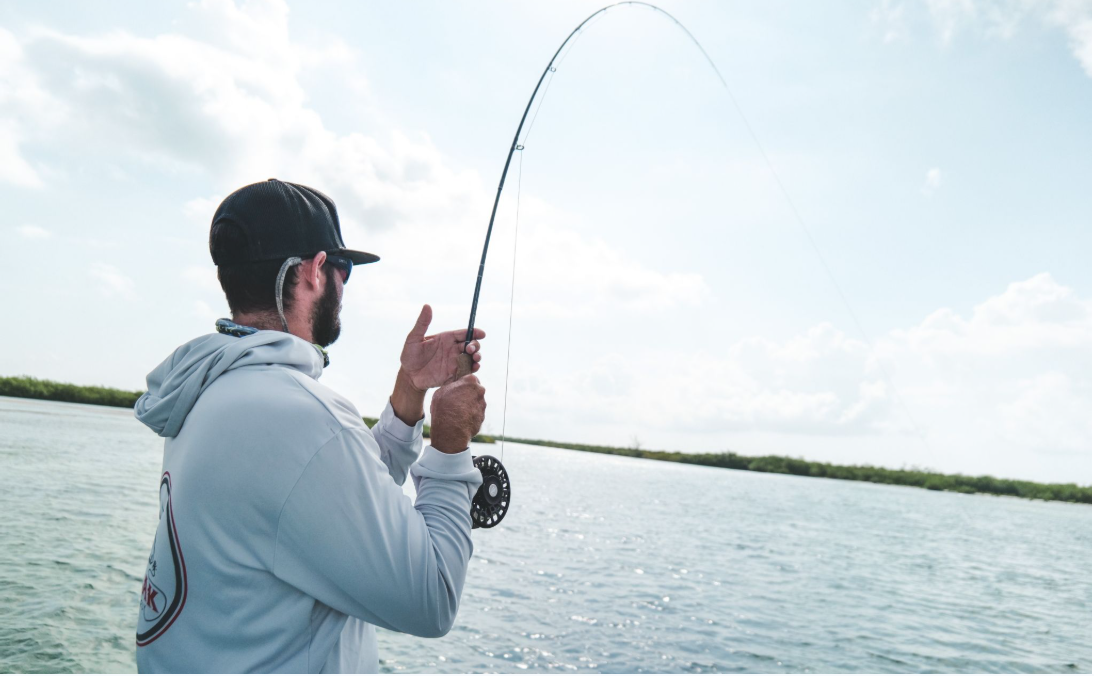
Most anglers show up to the flats thinking the fish are going to be the biggest thing standing between them and getting one on the fly. They’re definitely a challenge. But for the most part, the fish do the same handful of things every single day: tail the same grass beds, cruise the same edges, and feed on the same tides. The real variable is you, and specifically whether you understand the conditions well enough to be in the right place doing the right thing when those fish show up. Flats fishing in Xcalak will humble you quickly if you treat wind, light, and tides as background noise rather than part of the entire game.
How Wind Affects Casting and Spotting
How does wind affect flats fishing?
Wind gets blamed for a lot of bad days that were really just bad plans. Yes, a stiff crosswind will wreck your casting loop and put your fly somewhere you didn’t intend. But the bigger issue is what wind does to your eyes, not your cast. Chop on the water breaks up the surface and makes it much harder to spot bonefish, permit, and tarpon before they see you, which on a shallow permit flat is often the whole game.
The fix isn’t fighting against the wind harder. It’s learning how to use it. A slight tailwind can add distance to a cast you’d otherwise struggle to make, while a headwind often creates calmer water on the leeward side of a flat or mangrove shoreline. Calmer water usually means better visibility and better sight fishing opportunities. This is where your guide becomes invaluable. At Xcalak on the Fly, our experienced guides understand how changing wind conditions affect the flats and know how to position the skiff to give anglers the best opportunity for a successful presentation.
Light Angles and Visibility
Why is light important for sight fishing on the flats?
Sight fishing lives and dies on light. Early morning and late afternoon light, when the sun sits low on the horizon, can either illuminate a flat beautifully or create glare that makes spotting fish nearly impossible, depending on your position relative to the sun. That’s often the difference between seeing a permit forty feet away or walking right past one at ten.
Midday sun, high and directly overhead, usually provides the best visibility when the water remains calm. The overhead angle allows anglers to see deeper into the water instead of fighting surface reflections. Positioning yourself with the sun at your back whenever possible can dramatically improve your ability to spot bonefish, permit, and tarpon before making your cast.
Tides and Fish Movement
How do tides affect bonefish, permit, and tarpon?
Tides are the real clock the fish are following, not the one on your wrist. Bonefish, permit, and tarpon all use the tide to determine when and where they’ll feed. A rising tide pushes fresh water across the flats and into mangrove shorelines, carrying shrimp, crabs, and baitfish into newly flooded areas. That’s when you’ll often find fish moving onto the flats to feed aggressively.
As the tide falls, everything begins moving back toward deeper water. Fish naturally gather around channels, cuts, and drop-offs where food becomes concentrated. Ignore the tide, and you’re simply fishing beautiful water. Understand it, and you’re fishing where the food and ultimately the fish are most likely to be. Successful flats fishing is about following the tide just as much as following the fish.
Adjusting to Changing Conditions
Why do flats fishing conditions change throughout the day?
Wind, light, and tides can all change significantly over the course of a single day. That means the flat that produced incredible fishing yesterday morning during a rising tide and calm conditions might seem completely lifeless today if the wind has increased and the tide is falling. That’s not bad luck, it’s simply a different set of conditions requiring a different strategy.
The anglers who consistently enjoy the most success are the ones willing to adapt rather than expecting every day to look exactly like the last. Reading the conditions and adjusting your approach is one of the biggest skills you’ll develop as a flats angler.
Working With Nature, Not Against It
How do experienced flats anglers read changing conditions?
None of this is really about controlling anything. Wind, light, and tides are going to do exactly what they’re’re going to do regardless of how badly you want a shot at a permit. The skill lies in paying attention to those conditions, understanding how they’re influence fish behavior, and putting yourself in the right position before the opportunity arrives.
That’s the difference between simply fishing water and consistently finding fish. Learn to read wind, light, and tide together, and the flats stop feeling random. Everything begins working together, allowing you to anticipate fish movement and make smarter decisions throughout the day. That’s exactly what our guides at Xcalak on the Fly do every day, helping anglers maximize every opportunity on one of the Caribbean’s premier flats fisheries.
Want to experience world-class flats fishing with guides who understand every tide, changing wind, and shifting light condition? Book your next adventure with Xcalak on the Fly and let our experienced local guides help you target permit, bonefish, tarpon, and more on one of the Caribbean’s most remarkable fisheries. Contact us today and start planning your Xcalak fly fishing experience.