When people think of saltwater fly fishing, the Bahamas, the Florida Keys, Belize, the Yucatán, and the South Pacific often come to mind. Anglers travel the world for a chance to catch permit, bonefish, or tarpon on the fly. All of these places are excellent, and each offers different fish and experiences, but the Caribbean has something especially compelling about fishing the flats for these iconic species.
Why Is Caribbean Flats Water So Different From Other Fisheries?
Water Clarity and Habitat
The Caribbean’s flats sit behind reef systems that filter and calm the water before it ever reaches the shallows. The result is some of the clearest water in the saltwater fly fishing world, flats where you can see a permit’s shadow forty feet away before it sees you.
That clarity changes everything about how you fish. Sight fishing becomes the standard, not the exception. Instead of blind casting, anglers spend much of the day scanning the water, spotting fish, and making precise presentations.
The habitat itself also plays a major role. Turtle grass flats, sandy marl bottoms, mangrove shorelines, and coral structure create ideal feeding grounds for bonefish, permit, tarpon, snook, and countless baitfish. These environments hold crabs, shrimp, and other forage species that keep fish feeding shallow and visible rather than pushed into deeper water.
Do Bonefish and Permit Behave Differently in the Caribbean?
Species Behavior Differences
Fish behave according to habitat, food availability, and fishing pressure, and Caribbean flats fish are no exception.
In clear, structure-rich water, bonefish often move in larger, more confident schools while actively feeding across shallow flats. Permit tend to hold tighter to specific features such as reef edges, turtle grass beds, channels, and sandy pockets where crabs are abundant.
For anglers, this means success often comes from observation rather than simply covering water with casts. Reading fish behavior, understanding tides, and recognizing feeding patterns become just as important as casting ability.
That challenge is a big part of what makes Caribbean flats fishing so addictive. Every fish is visible, every opportunity is earned, and every successful presentation feels rewarding.
Should You Wade or Fish From a Skiff on Caribbean Flats?
Wading vs. Skiff Fishing
One of the things that makes Caribbean fly fishing destinations so versatile is that both wading and skiff fishing can be highly effective.
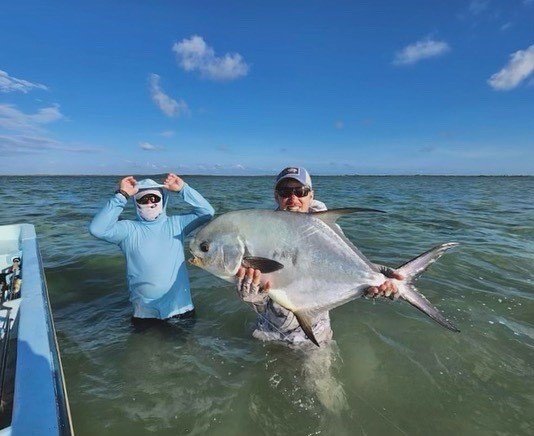
Wading allows anglers to move quietly through shallow water, making it ideal for targeting tailing bonefish and permit on firm-bottom flats. It creates an immersive experience where every fish feels close and every shot feels personal.
Skiff fishing offers different advantages. A guide can pole across large areas of water, cover more ground, and access remote flats that would be difficult or impossible to reach on foot. Elevated visibility from the bow also makes spotting fish easier.
The best fishing days often involve a combination of both approaches, switching between wading and skiff fishing as tides, wind, and conditions change throughout the day.
How Does Traveling to the Caribbean Compare to Other Saltwater Destinations?
Travel Experience Comparisons
Some saltwater destinations are built for volume, designed around convenience and high visitor numbers. The Caribbean still has places that feel more authentic and connected to the environment.
The travel may be a little slower. The villages may be smaller. But that effort often becomes part of the experience rather than a drawback.
For anglers traveling from the United States, many Caribbean destinations are surprisingly accessible, with convenient flights from major hubs throughout Texas and Florida. In many cases, you’re only a few flights away from some of the best permit, bonefish, and tarpon fishing in the world.
And once you arrive, the pace changes. Life tends to revolve around tides, weather, and the water itself rather than strict schedules.
Why Do Anglers Return to the Caribbean Year After Year?
The Caribbean Difference
What keeps anglers coming back isn’t just one species or one memorable fish.
It’s the combination of crystal-clear water, healthy habitat, diverse fisheries, and fish that still behave like wild fish. It’s the excitement of spotting a permit tailing on a flat, watching a school of bonefish slide across the shallows, or seeing a tarpon roll in a channel at sunrise.
Most importantly, it’s the feeling that these places still offer something increasingly rare in modern fly fishing: authenticity.
That’s exactly what you’ll find at Xcalak on the Fly.
Located on the southern edge of Mexico’s Caribbean coast, Xcalak offers anglers access to quiet flats, healthy populations of permit, bonefish, tarpon, and snook, and a fishing village that still feels connected to the water that surrounds it. The nearby Mesoamerican Barrier Reef, expansive turtle grass flats, and protected marine ecosystems create one of the most productive and rewarding fisheries in the Caribbean.
If you’re looking for a genuine Caribbean fly fishing experience, we’d love to show you what makes this place so special.
Ready to experience some of the most productive flats fishing in the Caribbean? Join us at Xcalak on the Fly and spend your days targeting permit, bonefish, tarpon, and snook in crystal-clear water surrounded by the beauty of the Mesoamerican Barrier Reef.
Whether it’s your first saltwater fly fishing trip or your tenth, our experienced guides will help you make the most of every opportunity on the flats. Contact us today and start planning your next Caribbean fishing adventure.