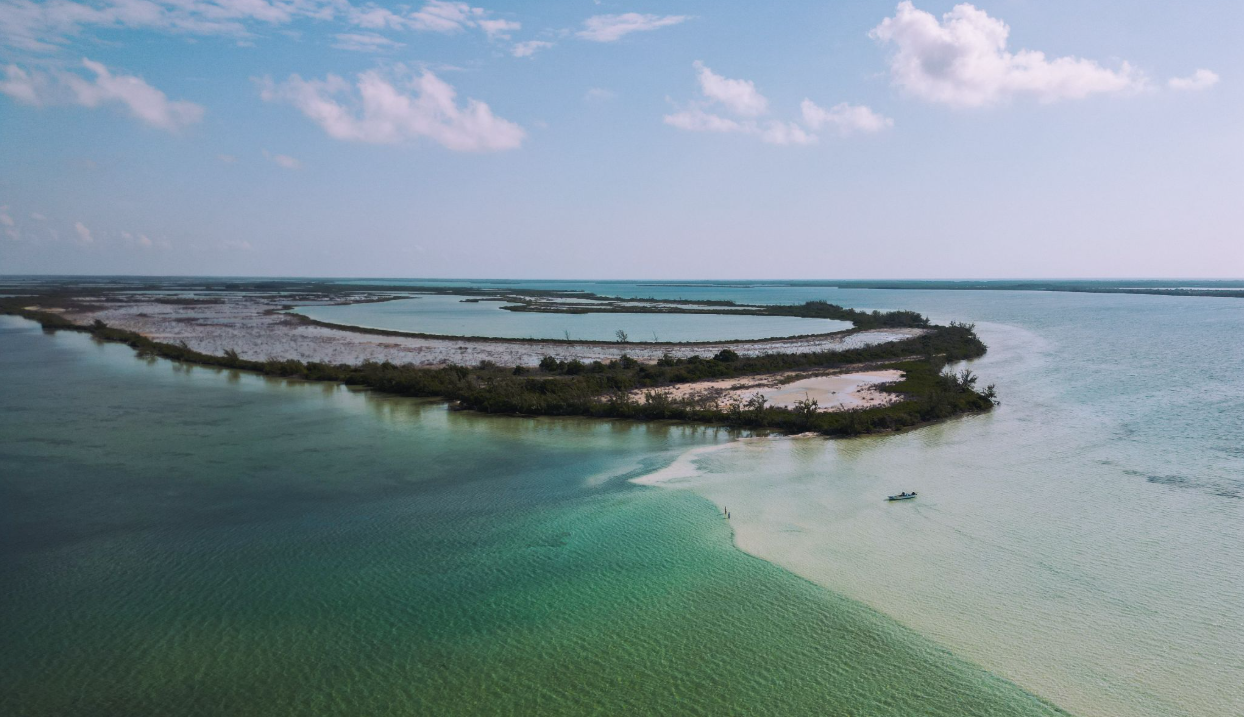
You pole across them in the early morning light, water so clear you can count the blades of seagrass beneath the hull, and everything about the scene feels permanent, like it’s always been here and always will be.
These flats don’t feel fragile at all; they feel like a never-changing force of nature.
That feeling is part of what makes places like Xcalak so compelling.
But it isn’t a given.
It’s the result of choices made every day by guides, anglers, conservation groups, and the communities that live alongside these fisheries. The flats you’re fishing exist in the condition they’re in because people decided they were worth protecting.
That’s worth understanding before you ever make your first cast.
What Makes Flats Ecosystems So Important?
Saltwater flats are among the most productive and most fragile marine environments on the planet.
Seagrass beds, mangrove systems, and coral reef structures aren’t decorative backdrops. They’re the architecture that the entire ecosystem runs on.
From the crabs and baitfish to the species we travel here to target, everything relies on the flats.
Bonefish feed across the grass flats. Tarpon use mangroves as nursery habitat when they’re young. Permit root through sandy pockets along the edges of the reef.
Pull any one of those pieces out, and the entire system shifts.
Xcalak sits inside the Xcalak Reefs National Park, a Marine Protected Area established in 2000. That designation carries real regulatory weight. Commercial fishing is restricted, waterfront development is carefully controlled, and eco-tourism serves as the framework within which everything here operates.
The Mesoamerican Barrier Reef, the second-largest reef system in the world, runs directly through this fishery.
The protection isn’t incidental.
These safeguards help preserve critical habitat while giving fish populations the opportunity to thrive. While no regulation can stop storms or natural environmental changes, they do help maintain a healthy ecosystem that supports the incredible fishing Xcalak is known for today.
Why Is Catch-and-Release Fishing So Important?
On the flats, catch-and-release is the standard.
But it’s worth talking about why, not just what.
These are not high-volume fisheries in the way a stocked freshwater fishery might be. Permit, bonefish, and tarpon populations remain healthy in places like Xcalak because they haven’t been pressured beyond what the ecosystem can sustain.
A released fish has the opportunity to spawn, feed, and continue contributing to the fishery for years to come.
That’s why proper fish handling matters.
The guides at Xcalak on the Fly handle fish with conservation in mind. Keeping fish in the water when possible, minimizing fight times, supporting them properly, and ensuring they recover before release are all important steps.
These aren’t ceremonial gestures.
There’s a real difference between a fish that swims away healthy and one that doesn’t.
When you fish with experienced guides who take conservation seriously, you’re not just learning how to catch fish. You’re learning how to protect the resource that makes the experience possible.
How Local Conservation Protects the Xcalak Fishery
There’s a version of flats fishing that treats a destination like a transaction.
You show up. You catch fish. You leave.
The place exists only to serve the trip.
That’s the wrong frame for somewhere like Xcalak.
This is a small fishing community built around the water it sits on.
The local guides here have spent their lives on these flats. They know which mangrove edge holds juvenile tarpon in the spring, which tidal flat sees the best permit movement on an incoming tide, and which seagrass beds consistently hold bonefish year after year.
That knowledge exists because the fishery does.
And the fishery exists because the community has worked hard to protect it.
Coming here as an angler means stepping into that relationship, not simply renting access to it.
Practicing proper catch-and-release, following guide recommendations, and respecting sensitive habitat areas aren’t inconveniences. They’re part of what allows this fishery to remain special.
Why Every Angler Plays a Role in Conservation
Every angler who fishes a place either helps take care of it or doesn’t.
There’s really no neutral position.
The decisions you make on the water, how you handle fish, how you move through sensitive habitat, and how you respect the resource all contribute to the long-term health of the fishery.
The flats around Xcalak are in the condition they’re in because enough people made the right decisions over time.
The water clarity. The healthy seagrass beds. The abundance of bonefish, permit, and tarpon.
None of that is accidental.
It’s the result of a long-term commitment to conservation.
Protecting the Future of Flats Fishing
One of the best parts about fishing Xcalak is knowing you’re experiencing a fishery that still feels wild.
Healthy ecosystems, responsible guiding, and conservation-minded anglers all play a role in keeping it that way.
Fish well. Handle fish properly. Respect the habitat. Support the guides and community that work every day to protect these waters.
The fishing experience you came here for depends on it.
Ready to Experience One of the Caribbean’s Most Pristine Flats Fisheries?
At Xcalak on the Fly, conservation and world-class fishing go hand in hand. Whether you’re chasing bonefish across shallow turtle grass flats, hunting permit on the edges of the reef, or searching for tarpon in the mangroves, you’ll be fishing a destination built around protecting the resource for future generations.