What makes Xcalak such a productive fishery for bonefish, permit, and tarpon?
You cannot go on a fly fishing trip without fish to cast at, that is a fact. We as anglers, especially those who like to travel for opportunities, want to fish for amazing species, and that is only possible in a place where the ecosystem comes together to form an awesome amount of habitat and conditions for species to thrive.
That is one of the cool things about Xcalak. The species here truly thrive, and that is because of a whole host of factors. Still, the big three when it comes to fishing in this part of the world are bonefish, permit, and tarpon, and this is why they thrive in our waters.
A Mosaic of Habitat That Fish Cannot Resist
Why do bonefish, permit, and tarpon have so much habitat in Xcalak?
Xcalak sits where Chetumal Bay, the Mesoamerican Barrier Reef, and coastal flats meet. This overlap creates a varied habitat that supports some of the best saltwater fly fishing in Mexico.
Bonefish use shallow grass and sand flats. Permit seek deeper reef edges, coral structure, and sand holes. Tarpon favor lagoons, mangrove shorelines, and channels before feeding on the flats. Here, all three habitats are close together, which is one reason why Xcalak fly fishing is so productive.
The ability to fish shallow flats, mangrove lagoons, and reef edges in a single day gives anglers a real shot at finding multiple species in different environments.
Exceptional Water Quality and Abundant Food Sources
Why is the water quality in Xcalak so important for fishing?
Healthy fisheries begin with healthy water, and Xcalak benefits from the reef system’s natural filtration and limited coastal development.
The result is clear, nutrient-rich water that supports thriving populations of mantis shrimp, swimming crabs, small baitfish, and invertebrates, exactly the food web these three species depend on.
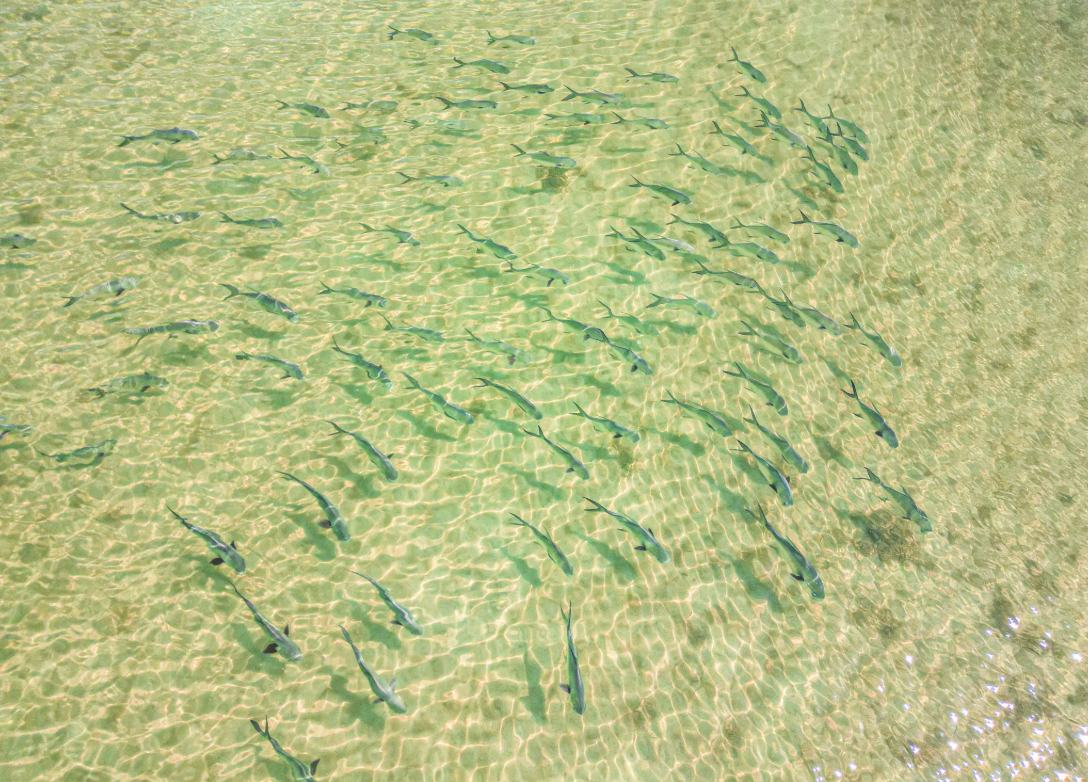
Bonefish push across the flats at low light, tailing aggressively in only inches of water. Permit cruise the reef-adjacent flats in search of crabs. Juvenile and rolling tarpon work the channels on both incoming and outgoing tides.
The food is here, so the fish are here.
Seasonal Patterns That Extend the Fishing Window
When is the best time to fish for bonefish, permit, and tarpon in Xcalak?
One of Xcalak’s underappreciated advantages is its extended season. Bonefish are present year-round, offering reliable action even during slower months.
Permit fishing in Xcalak is often best from spring through early summer when water temperatures rise and crabs become more active across the reef structure.
Tarpon begin moving through the area in late spring, with large migratory fish showing through summer alongside the resident population that holds in the lagoons year-round.
Unlike destinations dependent on a narrow seasonal window, Xcalak offers target species throughout most of the year, making it consistently productive regardless of when you book your trip.
Why Healthy Ecosystems Produce Better Fishing
How does conservation help the fishery in Xcalak?
The relationship between ecosystem health and fish density is direct. Degraded flats scarred by boat traffic, bleached coral, or runoff from overdevelopment produce fewer fish because they support less food.
Xcalak benefits from its remote location and the protections afforded by the Xcalak Reef National Park, which limits commercial extraction and preserves the reef structure that anchors the entire food chain.
For the visiting angler, this translates into spooky, wild fish in healthy numbers. The bones are laid up in water you can barely pole through. The permit refuse flies with the earned skepticism of fish that have never been hammered.
That is what a healthy system looks like.
What Sets Xcalak Apart for Species Variety
Why is Xcalak one of the best places for a flats fishing grand slam?
While many flats destinations are known for a single species, Xcalak’s main advantage is its extraordinary species variety.
The convergence of Caribbean reef, Mexican lagoon systems, and expansive flats makes targeting a grand slam fly fishing trip a realistic daily goal, not just a marketing promise, for skilled anglers and seasoned guides.
Add in snook in the mangroves, jack crevalle busting bait, and occasional cubera snapper, and Xcalak rewards both specialists and variety-seekers alike.
Ready to Experience Xcalak’s World-Class Fishery?
If you are ready to chase bonefish, permit, tarpon, and more on some of the best flats in the Caribbean, reach out to Xcalak on the Fly.
From guided fly fishing trips and all-inclusive lodging to snorkeling, reef adventures, and local expertise, we can help you experience everything that makes Xcalak one of the best saltwater fly fishing destinations in the world.