
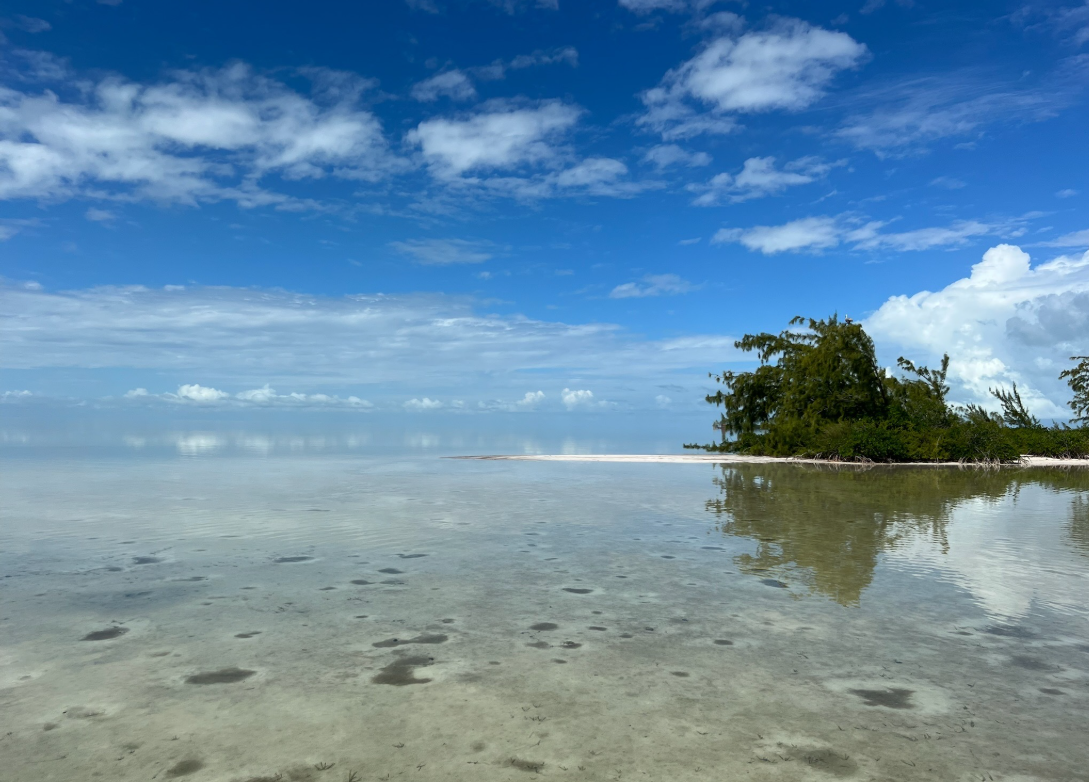
Flat fishing can be tough, no matter how you cut it. In the gin-clear shallows around Xcalak, Mexico, a perfect 70-foot cast means nothing if you never see the fish. Permit fishing in Xcalak, bonefish on the flats, and tarpon fly fishing in Mexico all demand eyes as sharp as your loop. At Xcalak on the Fly, our guides have watched thousands of casts. The anglers who succeed fastest are not always the strongest casters; they are the ones who read the flats like a book before lifting the rod.
Reading Light, Wind, and Water
How do light, wind, and water affect flats fishing?
Everything starts with visibility. Position the sun at your back or off to one side so it lights the bottom rather than blinding you. Polarized copper or amber lenses cut glare and turn the water into a window. On bright days, look for dark shadows against white sand or lighter blurs in grass. Clouds flatten the contrast. Slow your scan and trust subtle clues.
Your relationship with wind on the flats is definitely a love-hate one. A light breeze creates just enough texture to hide your approach while still letting you spot nervous water, those jittery ripples, and V-wakes. These signs tell you that fish are moving. Too much wind chops the surface, making both spotting and casting difficult as your line may be blown off target or lose accuracy. Dead calm turns the flat into a mirror that reflects your own shadow, making fish easy to see but harder to approach without spooking them.
Watch the water color too. Mud puffs, grass patches, channels, and Caribbean flats structure all tell you where the food is and where the fish will be. To cast successfully in any wind, understand where it is coming from and adjust your casting angle and force to compensate. Sometimes, wind helps lay your line gently; other times, it can make it nearly impossible to reach the fish. You have to understand the wind’s impacts to succeed on the flats.
Fish Behavior on Shallow Flats
How do bonefish, permit, and tarpon behave on the flats?
On the flats, fish move differently than in any other ecosystem. They cruise constantly, tail, and feed low. Bonefish move in loose packs, noses down, tails sometimes breaking the surface. Permit often cruise alone or in pairs, tilting to snatch crabs with a flash of silver. Tarpon patrol edges like a night watchman making rounds.
Learn their body language. A sudden stop means they have spotted something. A hard turn usually means they are spooked. In Xcalak’s lightly pressured waters, fish hold in skinny water longer than in busier places, but they still bolt at the wrong angle or a splashy landing. Observation lets you predict the next move before it happens.
Patience and Positioning
Why are patience and positioning important in flats fishing?
No, being patient has denied many an angler the fish of their dreams on the fly. Many first-timers see a fish at sixty feet and fire off a cast that lands ten feet short or spooks the school. Instead, wait. Let the fish come to you.
Your guide will pole or drift the skiff into position so the fish moves into your casting lane at the right angle, usually quartering away, so your fly lands in their line of sight without crossing their path. Quiet feet on the deck, slow rod lifts, and soft presentations matter more than distance.
Sometimes the best move is to stand still for five minutes and simply watch.
Seeing Before Casting
How can you get better at spotting fish on the flats?
Train your eyes to look through the water, not at it. Start far out and sweep in. Spot the shape, a dark oval, a moving shadow, or a push of water ahead of a tail. Once you lock on, call the clock position to your guide or yourself: “ten o’clock, forty feet, moving left.”
Only then strip the line and make the cast. This “see first, cast second” habit separates good days from those you will remember forever on the Xcalak flats.
Developing the Flats Angler Mindset
Flats fishing is a mental game. It rewards patience, presence, and constant learning. You will miss fish. You will spook others. Each trip sharpens your vision. The best anglers treat every flat as a new puzzle. Light, wind, tide, bottom, and behavior all fit together. Over time, water that once looked empty reveals an underwater world.
Next time you step onto the bow in Xcalak, remember: your eyes catch more fish than your rod ever will. Come ready to observe, and the casts will take care of themselves.
Ready to Improve Your Flats Fishing Skills?
If you are ready to experience world-class guided fly fishing in Xcalak, reach out to Xcalak on the Fly.
Whether you are chasing your first bonefish, working toward a grand slam, or trying to finally fool a permit, our experienced local guides can help you spot more fish, make better casts, and enjoy every moment on the flats.